SpaceComputer Mission and Technical Vision
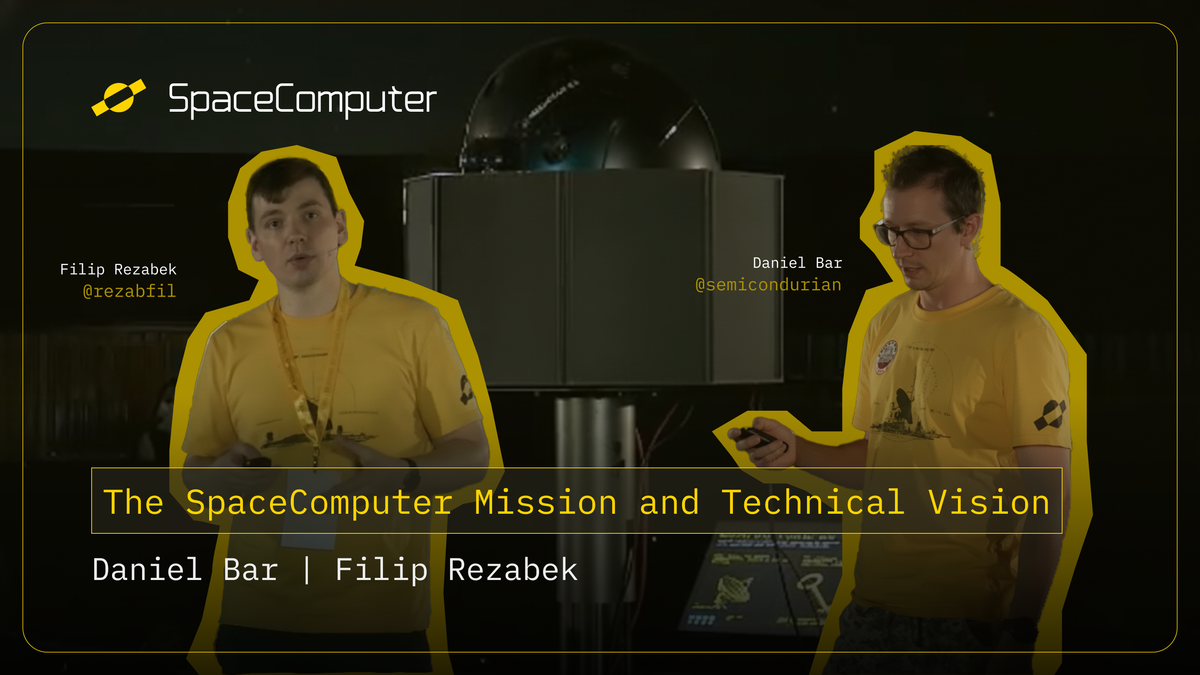
At Frontier Forum with Daniel Bar and Filip Rezabek
All right, so for the beginning of the session, we'll share a little bit of insight into what brought us the motivation to work in space and how the space sector currently looks like.
So what does spacefaring mean at the crypto frontier? What does space mean to different people means different things. For some people, it's just an empty void. And for other people, it's a kind of cyber sci-fi future.
I think that another way to look at it is a universal multi-civilizational canvas, like artists look at a canvas and they can create so many different things out of it.
So with a dash of entrepreneurial pragmatism, space has become more open for business than ever before.
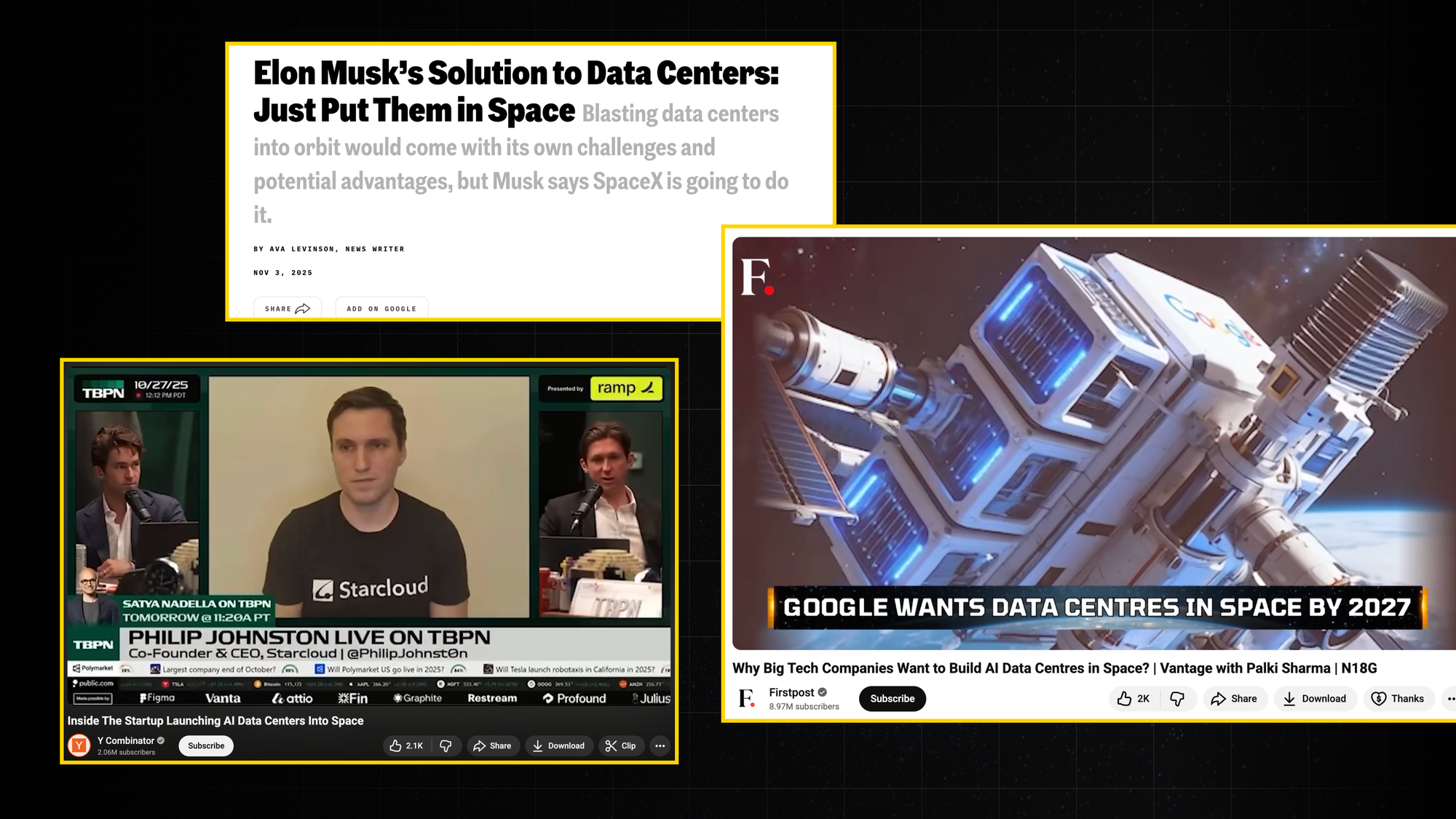
We see not only SpaceX, we see also the rise of the space-based data centers as a major movement, whether it's Elon Musk that is interested in it, Google that announced they're entering the space, and even mainstream accelerators like Y Combinator are looking and backing companies in that domain, like StarCloud that has been doing quite good work on that, bringing the NVIDIA H100 to orbit.
And taking a quick look at the history of what happened in space is a milestone to remember. The moon landing happened quite a while ago in the late 60s, and that kind of showed the ambitious ability to get to space. It's just already something that I think gave so many generations hope of what we can build as humanity.
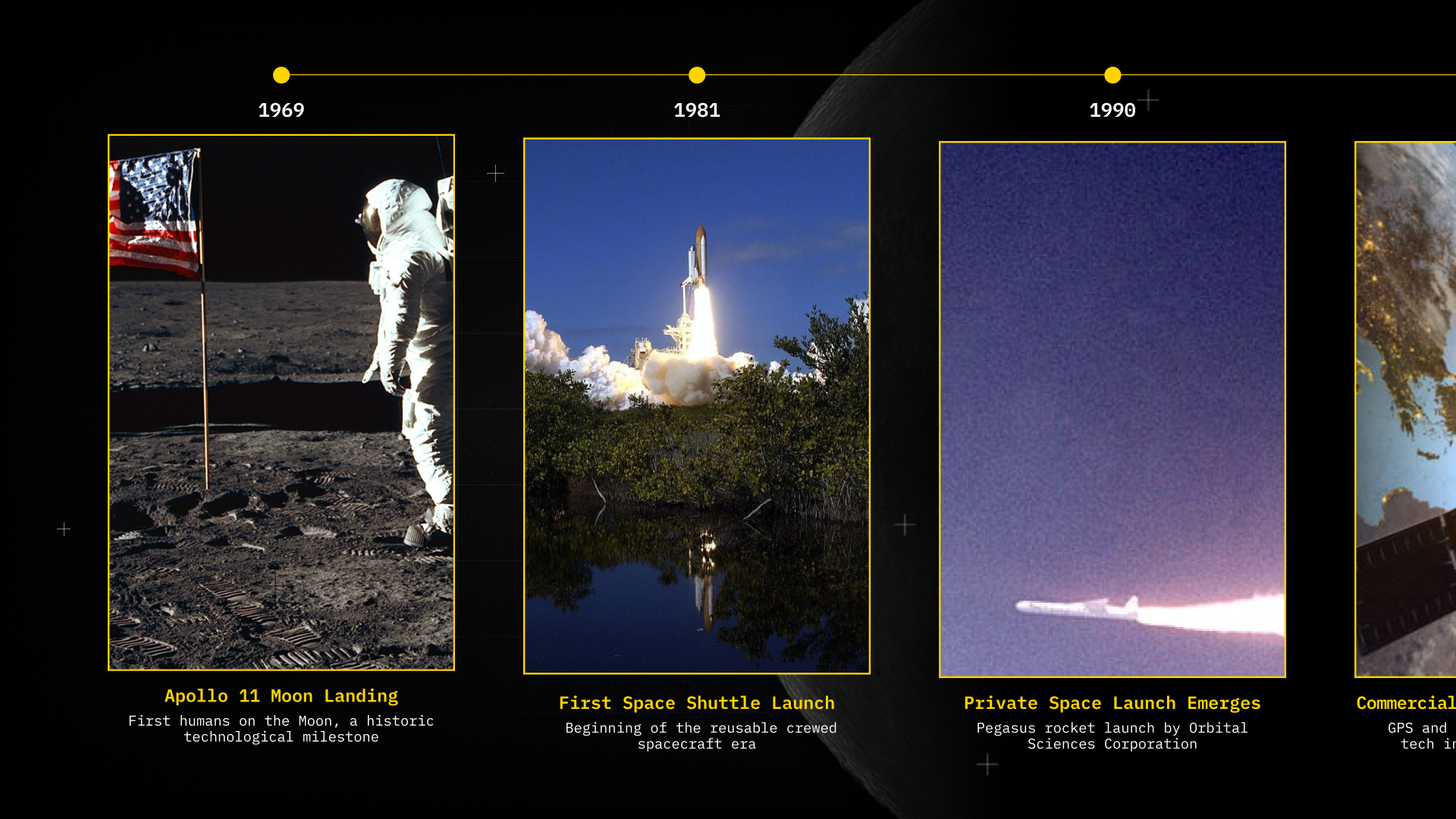
Afterwards, in the 80s, the first space shuttle, so essentially a crewed mission that was possible to use like airplanes but to get to space.
And then in the 90s, with the rise of consumerism in free markets, we saw the first private space enterprises and basically the ability to launch missions by private companies and no longer just by state-level actors. And then with the commercialization of satellite TVs and GPS, that kind of validated that this is not just some Cold War space race, it's something that is very relevant for so many applications that were unimaginable before.
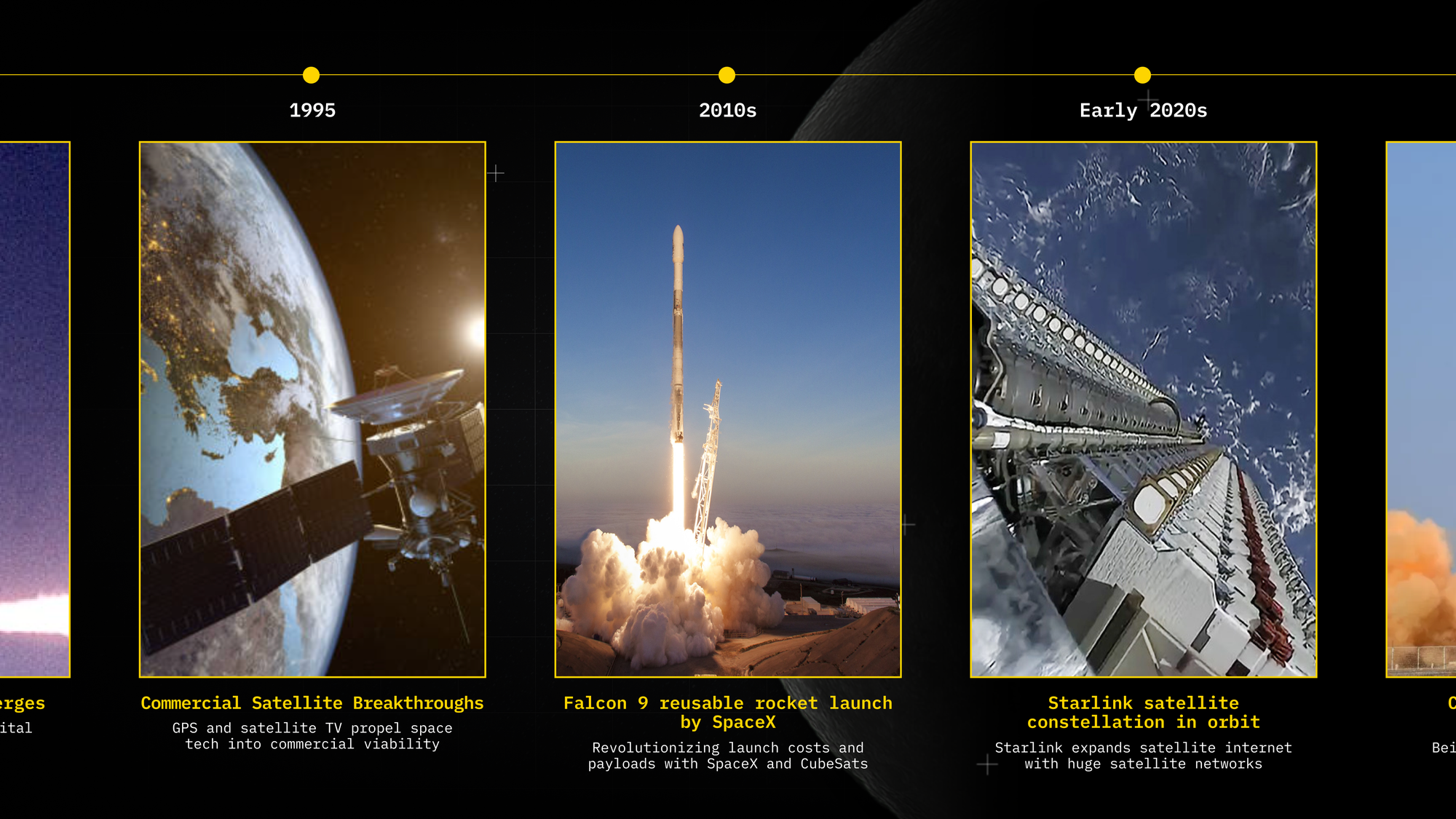
Fast forward to the 2000s, and the Falcon 9 mission success eventually brought reusable rockets, and that meant that we could launch much bigger payload at a much greater cadence and open up for just unimaginable things until that time. And one of which is Starlink, which today is deployed and supporting so many different regions. Personally, I live rurally and it's something I use every day to build technology at the frontier.
And we see that this is becoming something that's competitive across the market, so also Chinese companies are entering the space, Europeans, etc. And now that the space stations are somewhat phasing out from being care taken by governments, private companies are also entering that sector and they're going to be built by different private companies.
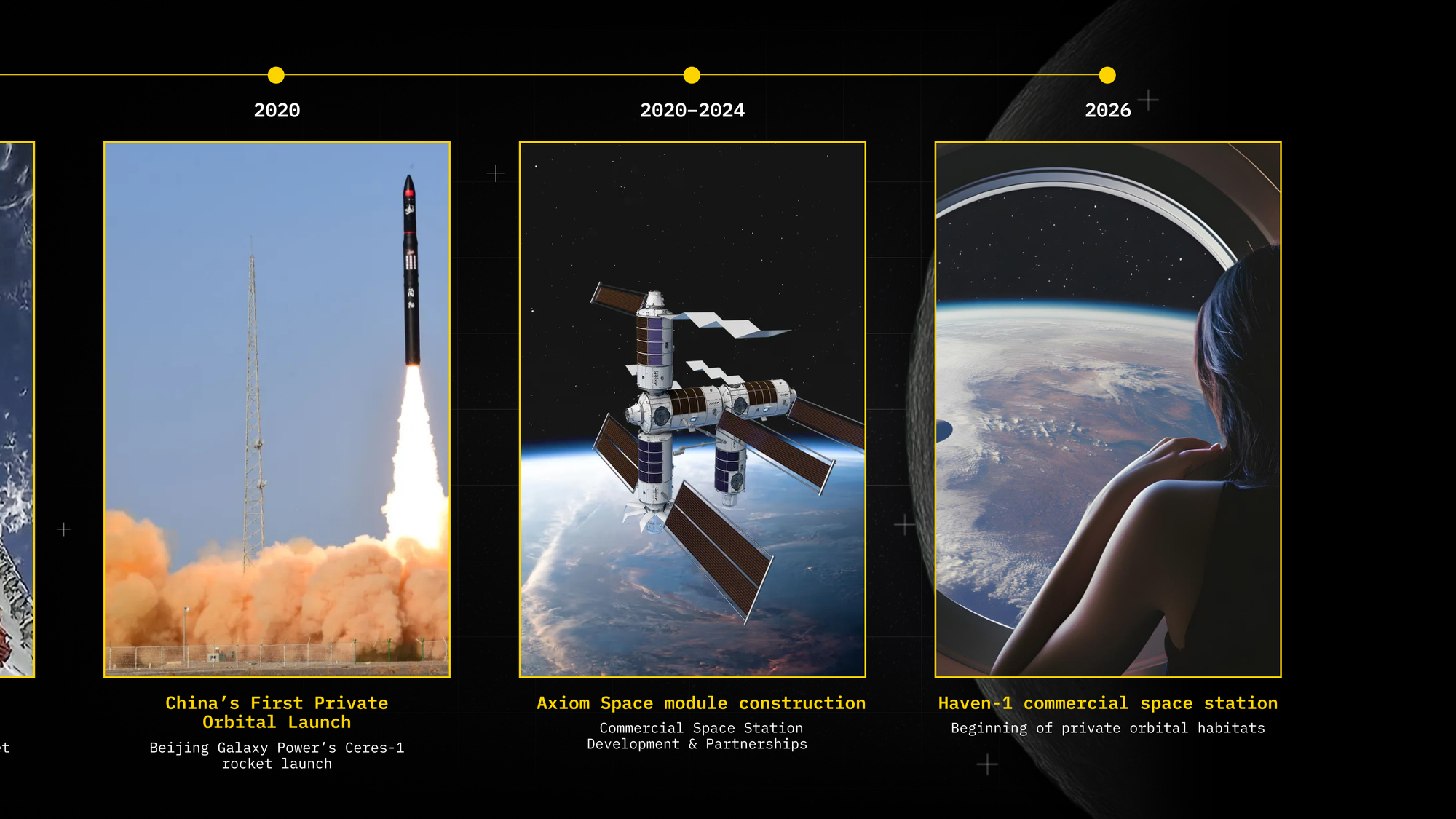
And an interesting story for Jed McCaleb that started Ripple and then Stellar and did something quite good with the crypto capital and founded Vast, and they're going to build the first space tourism with Haven One hopefully launching in 2026.
Now if we think about space as a stack from the point of view of a builder, looking at the launch providers is kind of like the layer one, because without being able to get into orbit, there's not much you can do.
So layer one of space in some respects is today SpaceX with hopefully Starship getting 400x more payload volume, and Blue Origin and other players entering the space.
Then orbital infrastructure, that would be the space stations and other auxiliary stuff that are either permanently there or providing services for space native deployed constructs.
Then rideshare and satellite deployment. So when we're like an early stage startup, we don't always want to develop our own rockets or don't want to always develop our own ground station or buses, energy. So we basically have companies that deal with that too.
And we can buy these things, I wouldn't say entirely off the shelf, but it's getting more and more commoditized. And then afterwards, there's the communication network. So if Starlink is supporting residential internet on Earth, there's more and more communication offering also for inter-satellite links and otherwise competitors to Starlink in residential Earth.
Including players from other places like Guang that kind of tries to follow the footstep of Starlink. But from China, space is a rather national security sensitive aspect, topic.
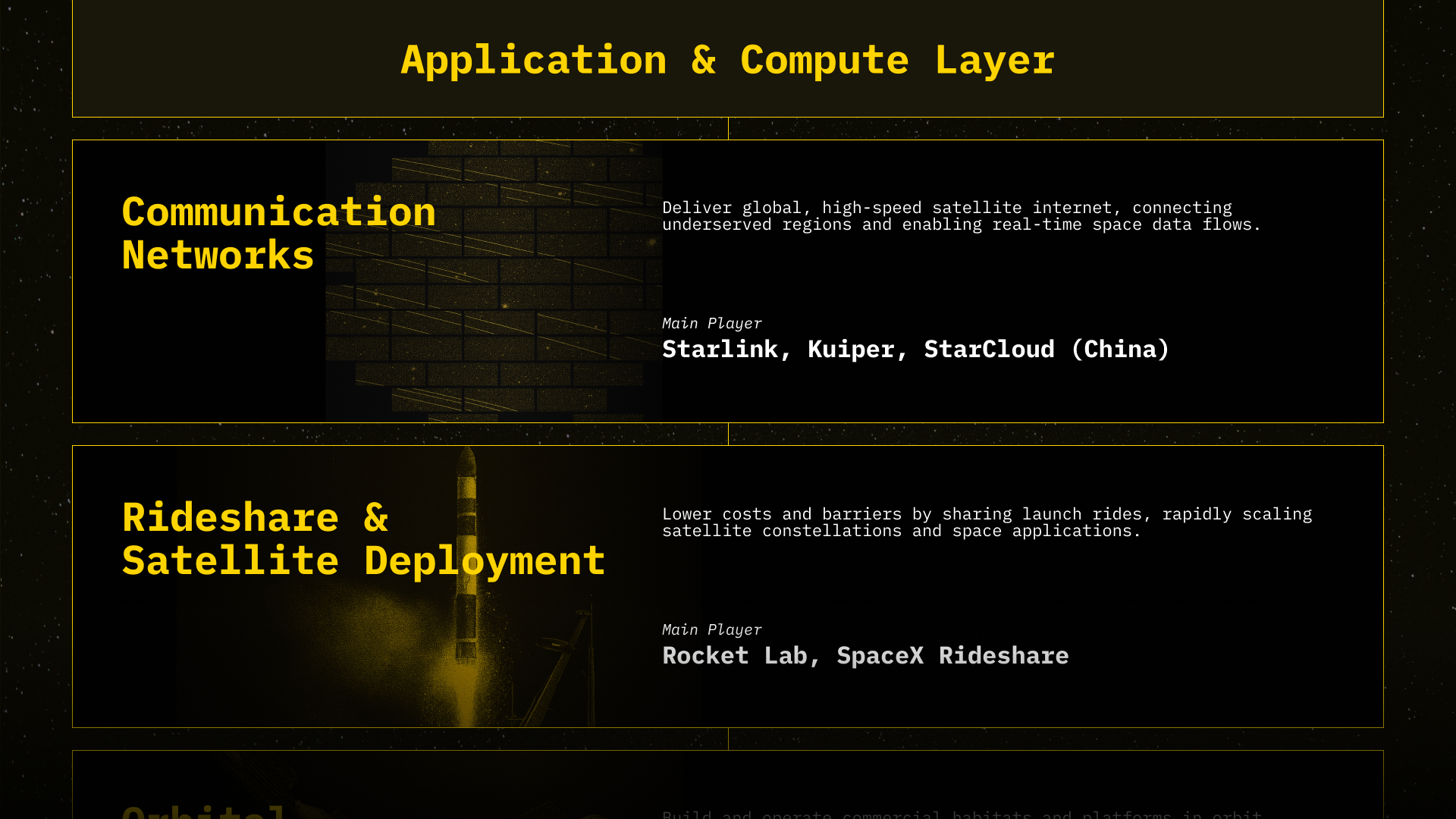
And then when we're looking at the application and compute stack, now that there's much greater payload than before, we can start thinking about novel and unique applications.
And with SpaceComputer essentially, we're looking at building a public infrastructure in the very same sense that we had Bitcoin and Ethereum being built on Earth on top of the internet. You were essentially building permissionless layer for smart contract and settlement as a space native compute environment. And with that, I'll pass to Filip, my co-founder.
Hello everyone, great to be here. And again, also on my behalf, welcome. Hope you are having a great time.
From my point of end, with respect to the technical background, try to see what are some of the services actually we can offer. And what makes me very passionate about the stuff we try to build. So we definitely see that when it comes to building secure systems, there are some challenges that we are facing on Earth with respect to the limitations.
Some of the solutions provide. And we would like to ideally have the opportunity to build a SpaceComputer with some of these challenges in mind and see what can be done in a better fashion when starting a new era of frontier with respect to the space infrastructure that we foresee. One of them is definitely very prominent, which is how actually users can interact with the space infrastructure.
And for that, we definitely see a huge market with respect to operating or running your own base stations on Earth that are actually able to communicate with the systems. But of course, afterwards, once you are able to communicate, you can also unlock many types of solutions, especially in a more and more autonomous world with respect to algorithms, AI, key material that actually is being used in most of the applications that we are using on a day-to-day basis. And of course, moving forward, we are still talking about interactions with on-Earth applications.
But definitely moving forward, we are very excited that there is a huge potential for new markets that are actually focusing on building space-native applications that are actually not maybe even around yet, because just the technology is not ripe yet. But we definitely see that there is a huge potential with respect to that. So, since Daniel mentioned, there are a couple of challenges we are actually facing with respect to space itself, I want to just mention a little bit of a reflection from our state of space that we are actually experiencing.
We definitely see the future is bright with respect to the next 10 years, but what happens in between, it's something that we are struggling with on a day-to-day basis. Shout out to our R&D team that is heavily working on these types of challenges. And it's something that makes us sometimes a bit frustrated, but also very hopeful that we see that we can be part of something great with respect to enabling new types of solutions.
And this is something that we are trying to solve with respect to providing and solving some of the challenges with respect to compute communications, which are definitely many real challenges because, as Daniel was hinting at, even though there is a commercial off-the-shelf service claimed to be, it doesn't necessarily translate into building such type of solutions in the real world.
And one example, even though it's something that we are used to on Earth with respect to using TLS solutions, communicating to any website, it's not taken for granted when it comes to space native infrastructure. Around 50% of communication happening with satellites is actually unencrypted, and you can easily listen if you just deploy your own antennas on Earth.
And it's something that we actually have to walk and try to build the solutions from the beginning. So we have to actually really build the fundamental blocks so that we can crawl before we walk, and walk before you run, actually. So we are actually spending the last year on identifying some of the challenges we have to solve.
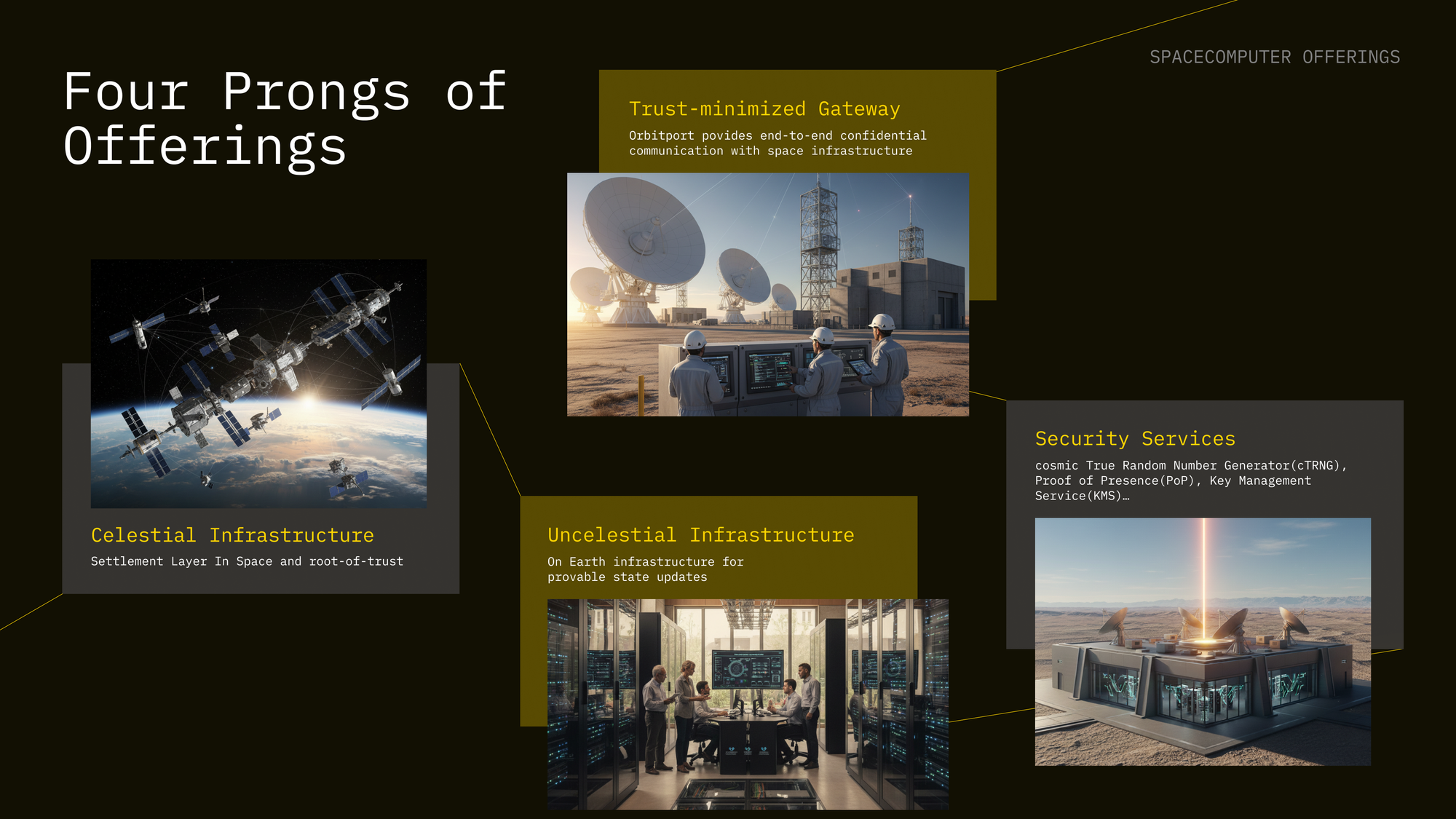
With respect to that, we divided our activities into four dedicated prongs. So, of course, Dalia will be talking about it later, is the aspect of the Celestial infrastructure, the Layer 1 solution itself, that will be heavily relying for the scalability aspects on the Celestial infrastructure. But, of course, other services that actually have to enable this type of communication is Trust Minimized Gateway, that we call Orbitport, and, of course, later on, offer solutions in the direction of security services, which is, for example, Cosmic True Random Number Generator (cTRNG) that we already are offering.
We see a huge potential for proof-of-presence solutions, key management services, and many others moving forward. So diving a bit more into the technical aspects where we currently stand, we are focusing on leveraging as much as possible from our single satellite that we currently have available. But, of course, we are launching several new satellites during next year, to which we want to have access and provide the capabilities that we are so excited about, about the aspect of the confidential compute in more detail as well.
And how users actually interact with this type of infrastructure is through the gateway we call Orbitport, that is aiming to provide and be always extended to also provide good usability to users on Earth in case they want to interact with our infrastructure in space. So what is Orbitport? You can think of it as a trustless gateway that is enabling space communication. So it, in general, aims to provide end-to-end confidentiality for users on Earth with respect to getting information from the satellites themselves, and, of course, integrity of their data as well.
And we definitely see that before we actually are able to deploy something, we need to have a way on how to communicate. And the important aspect is that Orbitport itself should be able to communicate with many types of providers that we want to integrate in the future to enable permissionless environments as well. Now when we are able to communicate, what is actually happening and enabling the new type of solutions with respect to the satellites themselves? And on that part, we are focusing on leveraging the capabilities from the physical isolation because it's, as we know, it's beyond borders, it's beyond reach, and definitely very much immune to physical tampering, which is something very interesting, especially if you look at some of the recent attacks on trusted execution environments that are actually struggling with keeping up with that, even though there are many great initiatives, it's something that we have to prepare for and build for the infrastructure in space as well.
And definitely we see that it's the ultimate tamper-proof and sensitive resistant layer that is something relevant for us. One of the components that we definitely see is for the computational resilience, the aspect of SpaceTEEs that are aiming to provide a dedicated isolation environment on the CPU and promise to ensure that your secure data and code itself is being protected as well.
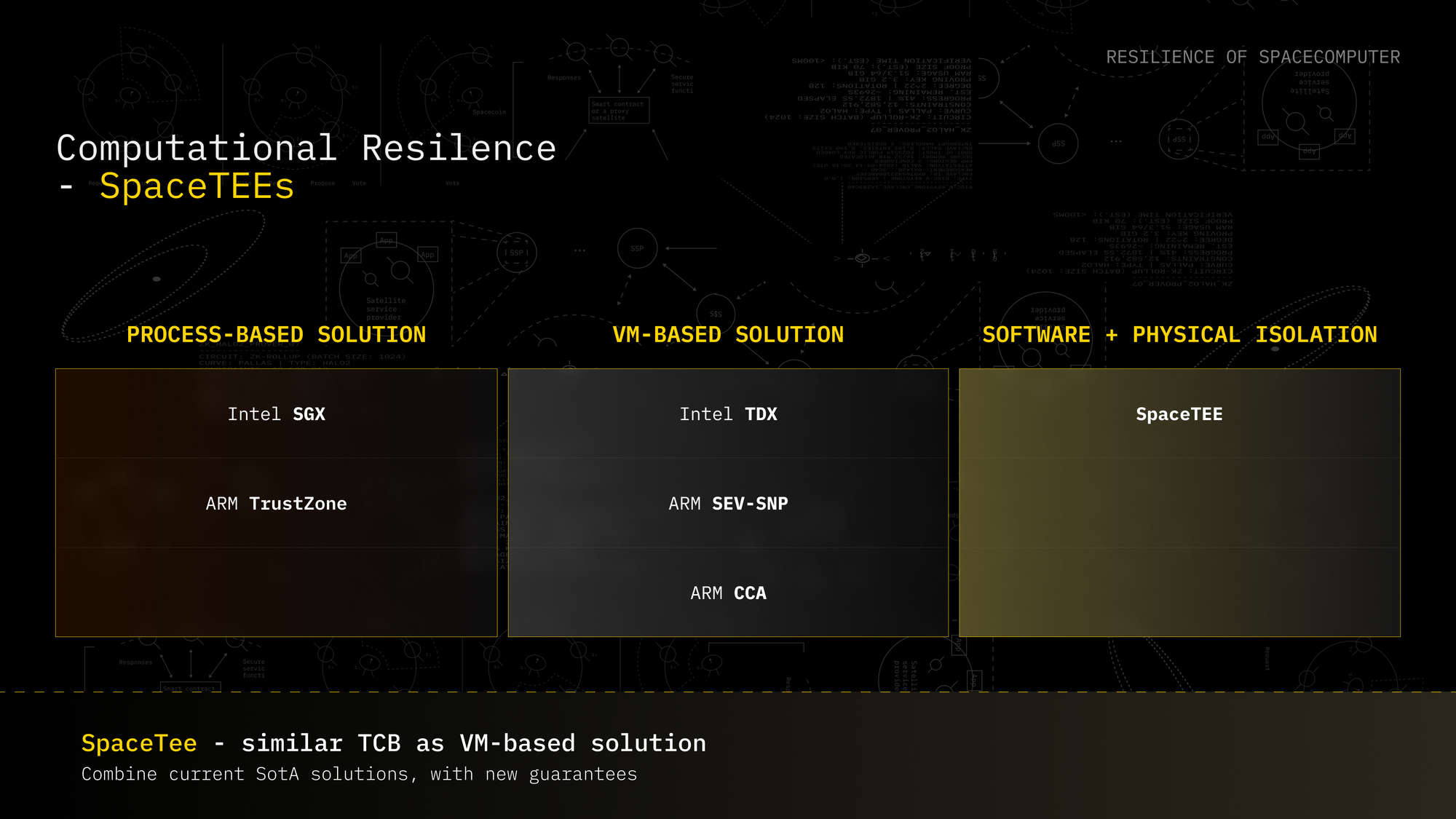
This is just a brief comparison on how do we currently position the SpaceTEE itself, but stay tuned, actually we are currently in a work of our own architecture that we call SpaceFabric that aims to provide the capabilities we are used to from current TEEs, but is combining with additional hardware components to actually provide much more robust environment for running your sensitive operations itself.
And once we have the communication enabled, we are currently already offering one solution called Cosmic True Random Number Generator (cTRNG) that is enabled by the communication via orbit port to actually get your confidential data on Earth and deploy them in different settings. We also are running our random beacons that actually people can use and we are currently integrating with first partners that are able to provide this type of capabilities to users on-chain through a dedicated Oracle. So definitely happy to announce the partnership very much soon, and people can start to play around and deploy and use Cosmic Randomness rather early.
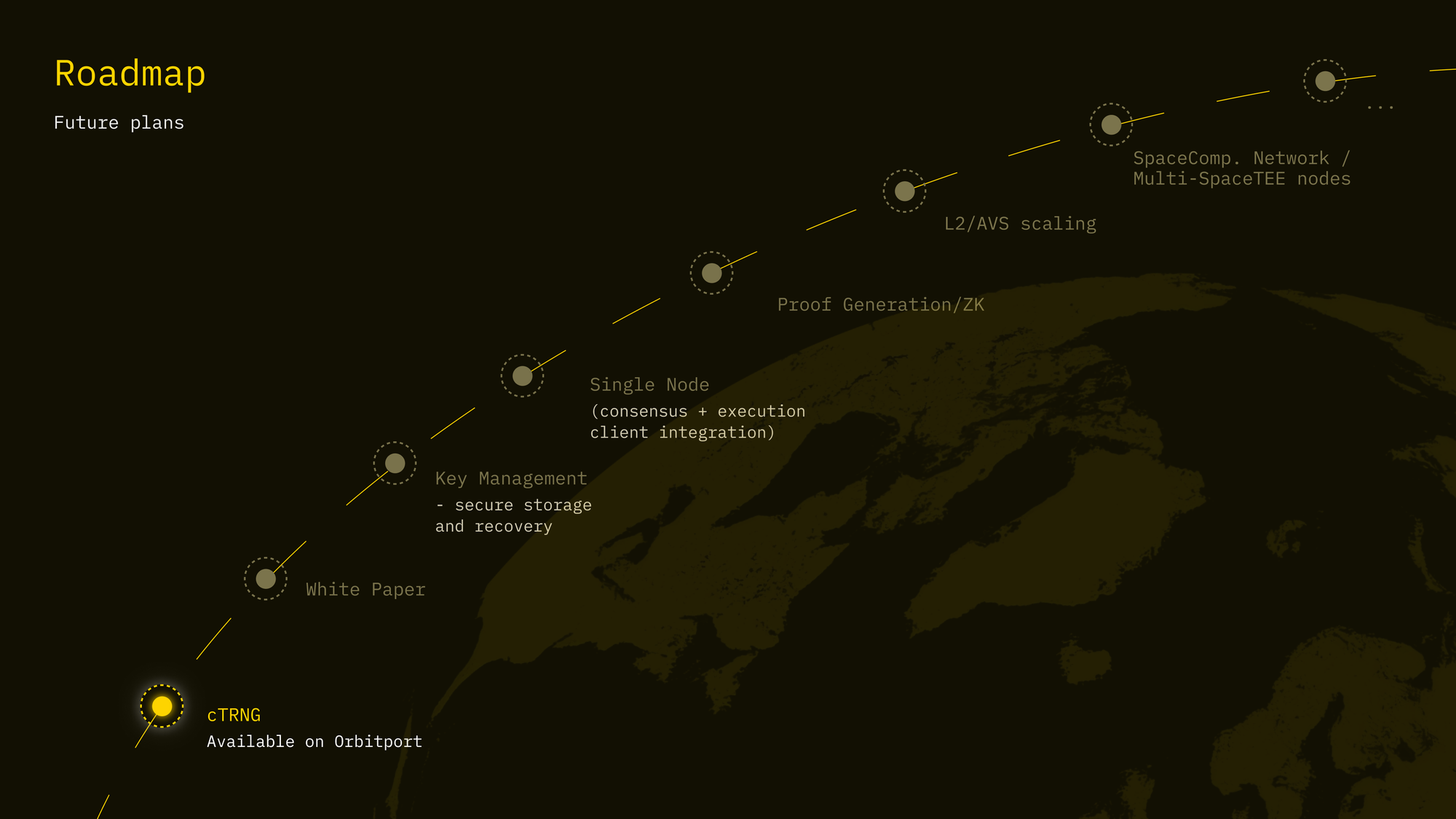
With that, basically also I want to dive into the aspects where we see current plans for SpaceComputer. So as mentioned, we are currently actively working on the paper focusing on the SpaceFabric, which is the architecture of the satellites themselves that we are aiming to provide for the next generation of confidential compute. And through that we want to also unlock some of the interesting use cases regarding key management for both on-Earth native, but also in hybrid environment for on-Earth and space environments.
Deploy a single node that actually will be running our dedicated consensus with execution clients. So we're really much looking forward to the talk of Dahlia that will be covering the aspect of consensus work that we are currently pursuing, even though it's not fully fleshed out yet. It's definitely exciting.
And start to enable new types of security services, either in the direction of proof generation using zero-knowledge proofs, scaling through L2s, and of course something that is very exciting for us, try to build and have a small constellation of satellites that are enabling to run our dedicated L1 with the confidential compute capabilities themselves. So we are a little bit bullish on this aspect that Earth is the first base for compute, but it shouldn't be the final compute frontier as we see. And there are many activities in the market that are providing us confidence that we actually will be living in a very interesting future with respect to space native applications themselves.
Thank you very much, and if you are interested, feel free to reach out. We'll be also here and looking forward to see you during the event. Thank you.
Got questions?
Join the Community on Telegram.
Follow Daniel on X
Follow Filip on X
Watch the rest of the talks from Frontier Forum on YouTube.