

SpaceComputer Providing Reliable True Randomness from the Tamper-Proof Decentralized Orbital Network
Among the multitude of SpaceComputer's interstellar and earthbound missions, is to reliably provide true randomness from our tamper-proof decentralized orbital network.
This blog will cover the need for entropy as well as the underlying architecture currently being employed to achieve this mission.
Entropy and Random Number Generators (RNGs) are foundational to modern computing and security.
High quality entropy is essential for generating unpredictable numbers that have many use cases including:
- Creating unpredictable encryption & decryption keys that serve a vast array of cryptographic schemes and serve, among other things, cryptocurrencies and digital wallets.
- Reliably generating nonces and random challenges in security protocols (such as TLS/SSL handshakes, VPNs and two factor authentication tokens).
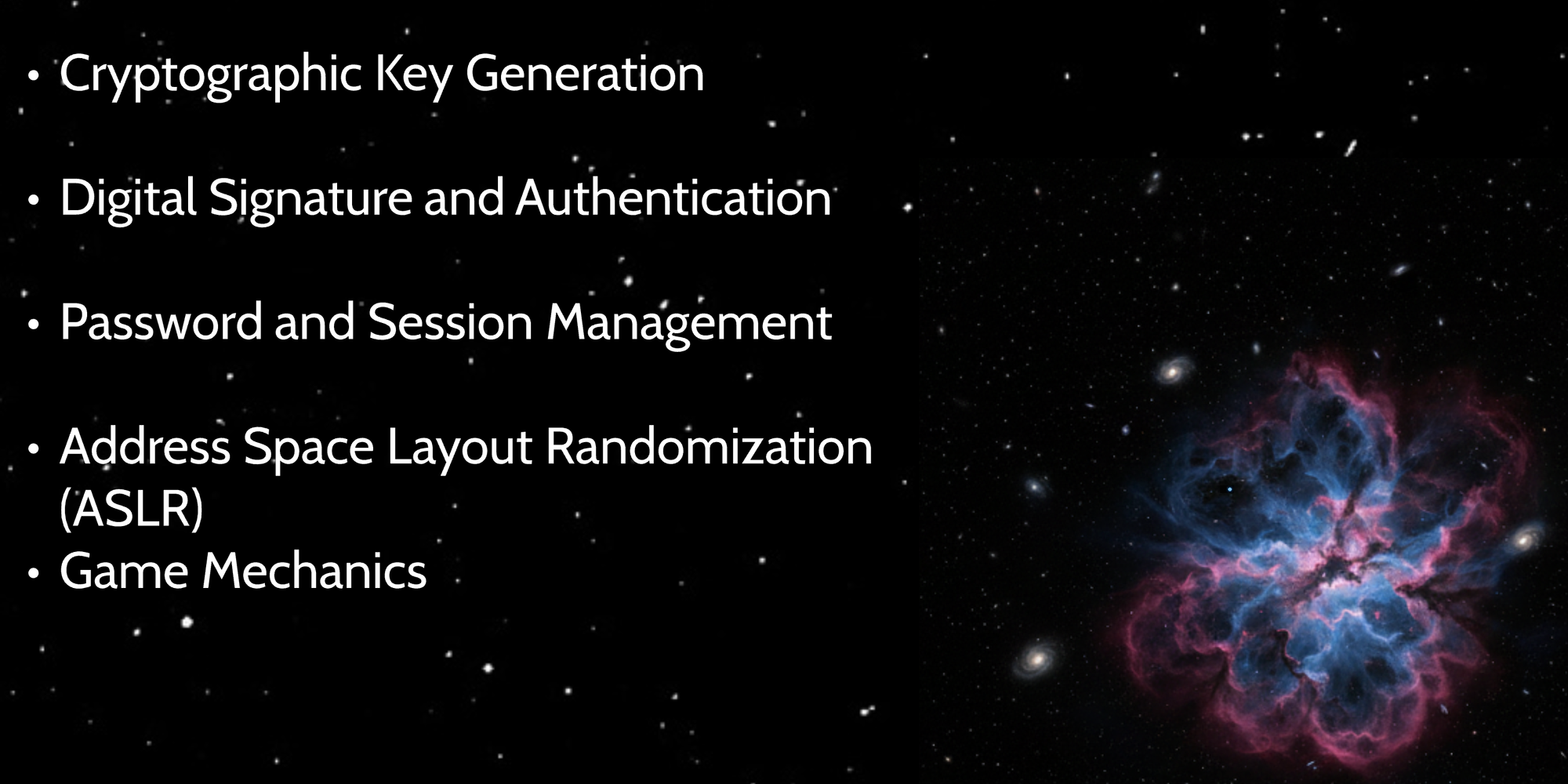
- Creating unique and unguessable session IDs for applications, generating salt values for password hashing, thus preventing attacks such as session hijacking.
- Address Space Layout Randomization (ASLR) - A security feature in operating systems that randomly arranges the memory layout of critical data structures within a process's address space, making it much harder for an attacker to execute exploits, due to memory locations becoming unpredictable. The effectiveness of ASLR is only as good as the quality and reliability of the underlying entropy.
- Video game mechanics depend heavily on randomness when generating loot drops, calculating critical hits, constructing map layouts and item stats.
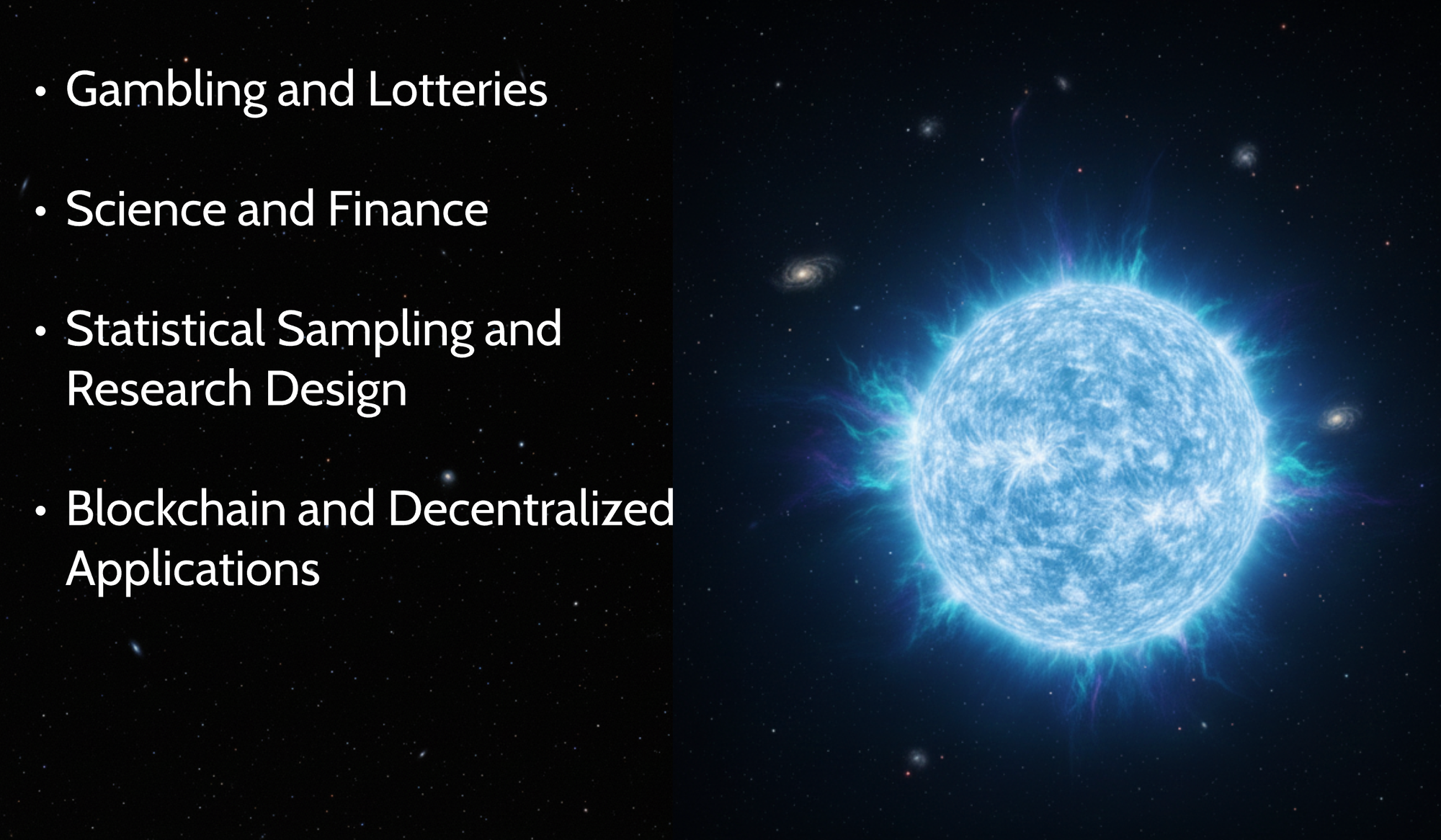
- Gambling and lotteries (both privately and government run) require random number generators to ensure that they are statistically unbiased and unpredictable.
- In the fields of Science and Finance, Monte Carlo simulations rely heavily on randomness sampling to estimate numerical result. These are vital in financial modeling when calculating risk and value complex derivatives. In physics, engineering and statistics high quality entropy is essential to model complex systems where a deterministic solution is intractable.
- In statistical sampling and research design, randomness is utilized when wishing to ensure that samples that are selected for a study are truly random and representative of a larger population, in order to eliminate any chance of bias. This is crucial in fields such as medical trials, social science and opinion polling.
- In blockchain and decentralized applications, generating trust-less randomness caters to smart contracts in areas such as NFT drops and selecting validators in certain Proof of Stake protocols.
Since results are public and must be verifiable, achieving a secure and unpredictable on-chain RNG is a complex problem that requires advanced protocols that are almost always rooted in high quality entropy sources.
Cosmic radiation serves as a reliable source of extremely high quality entropy that facilitates the creation of cTRNGs: Cosmic True Random Number Generators.
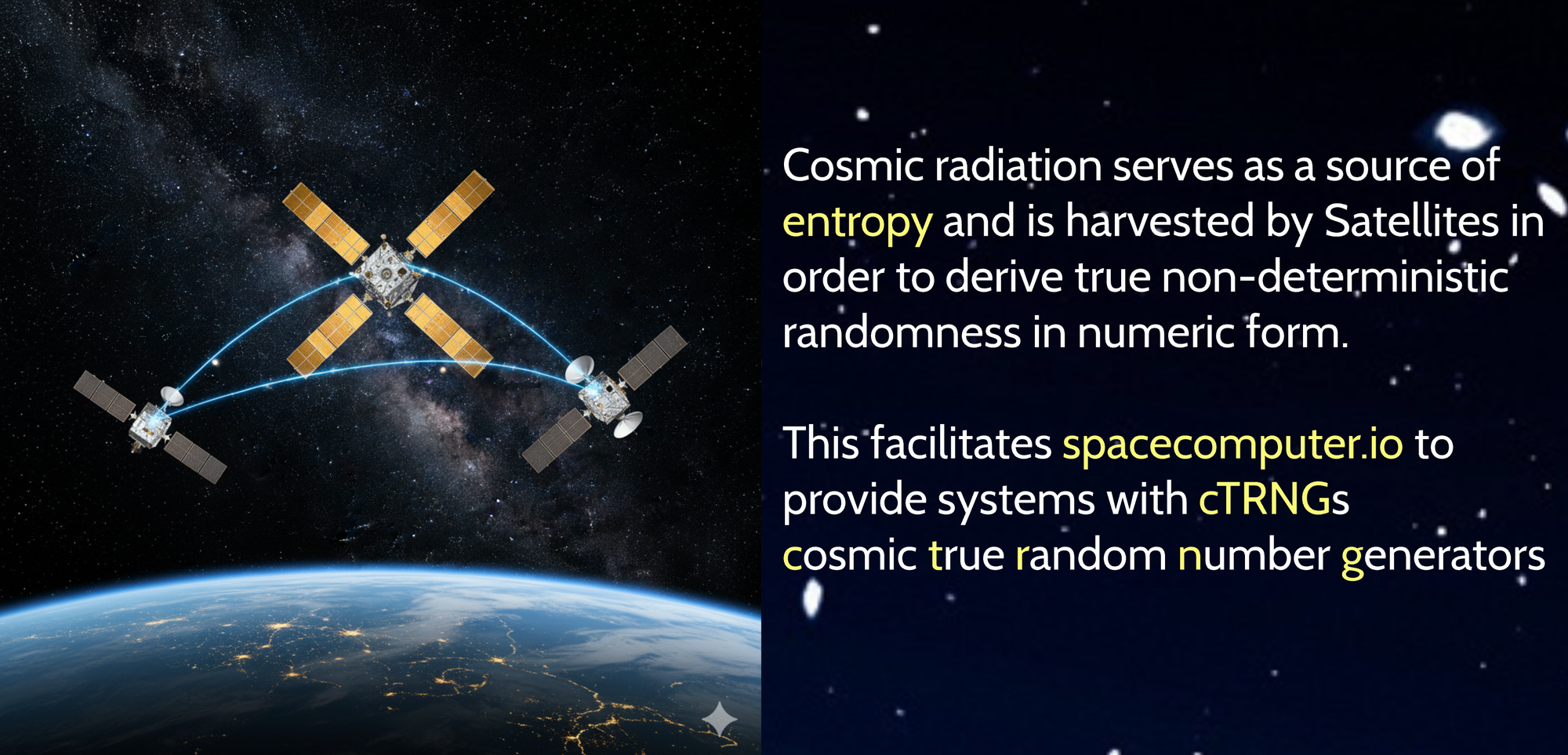
The SpaceComputer component responsible for communicating with our Orbital Network and orchestrating the harvesting, processing and exposure of cosmic radiation in numeric form is called OrbitPort.
Below is a brief high level overview of its various components that enable this graceful process.
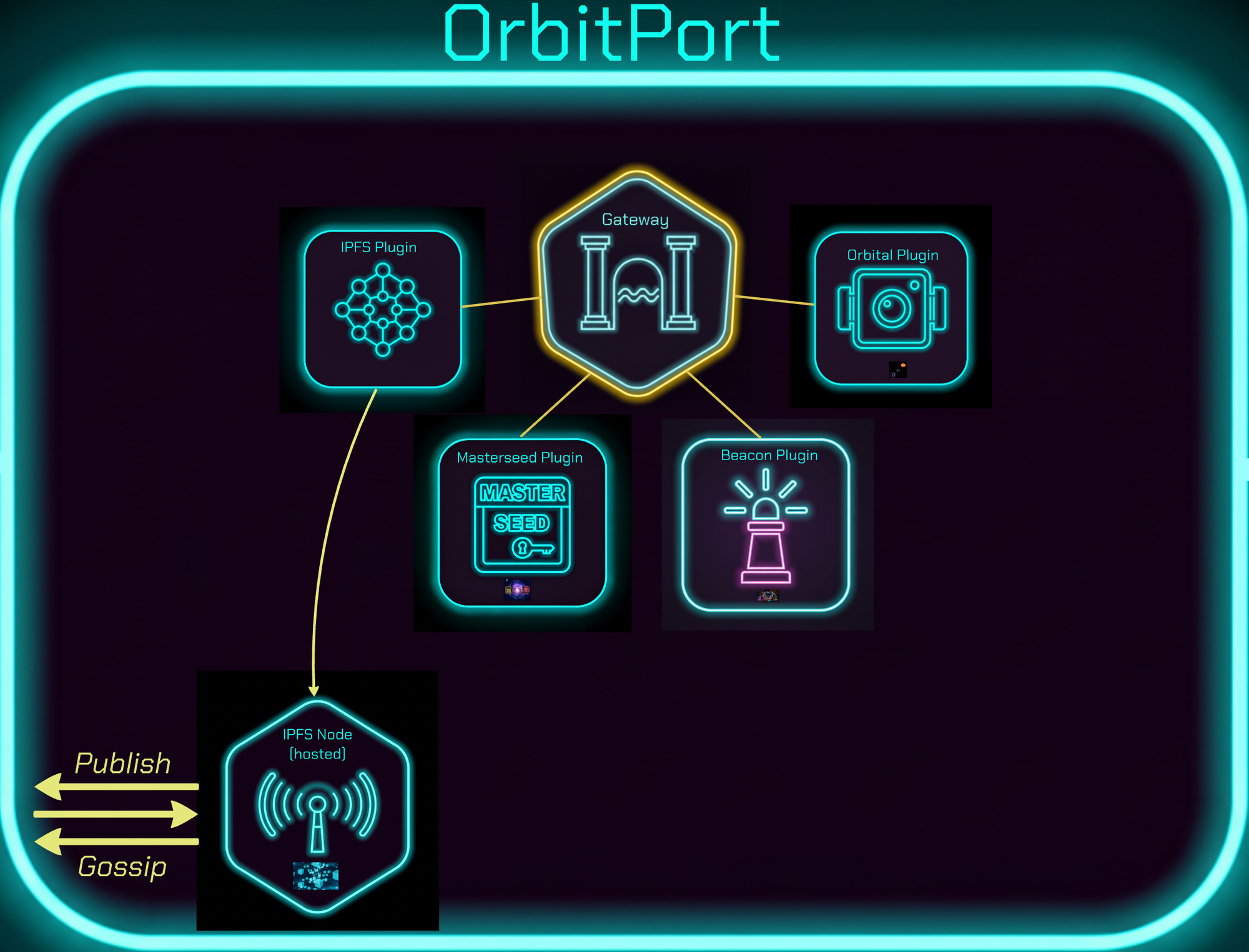
The main component in OrbitPort is the Gateway which serves as the framework's generic core and is extended by an assortment of purpose built plugins.
The Orbital Plugin serves as our egress module that communicates with orbital service providers, primarily satellites.
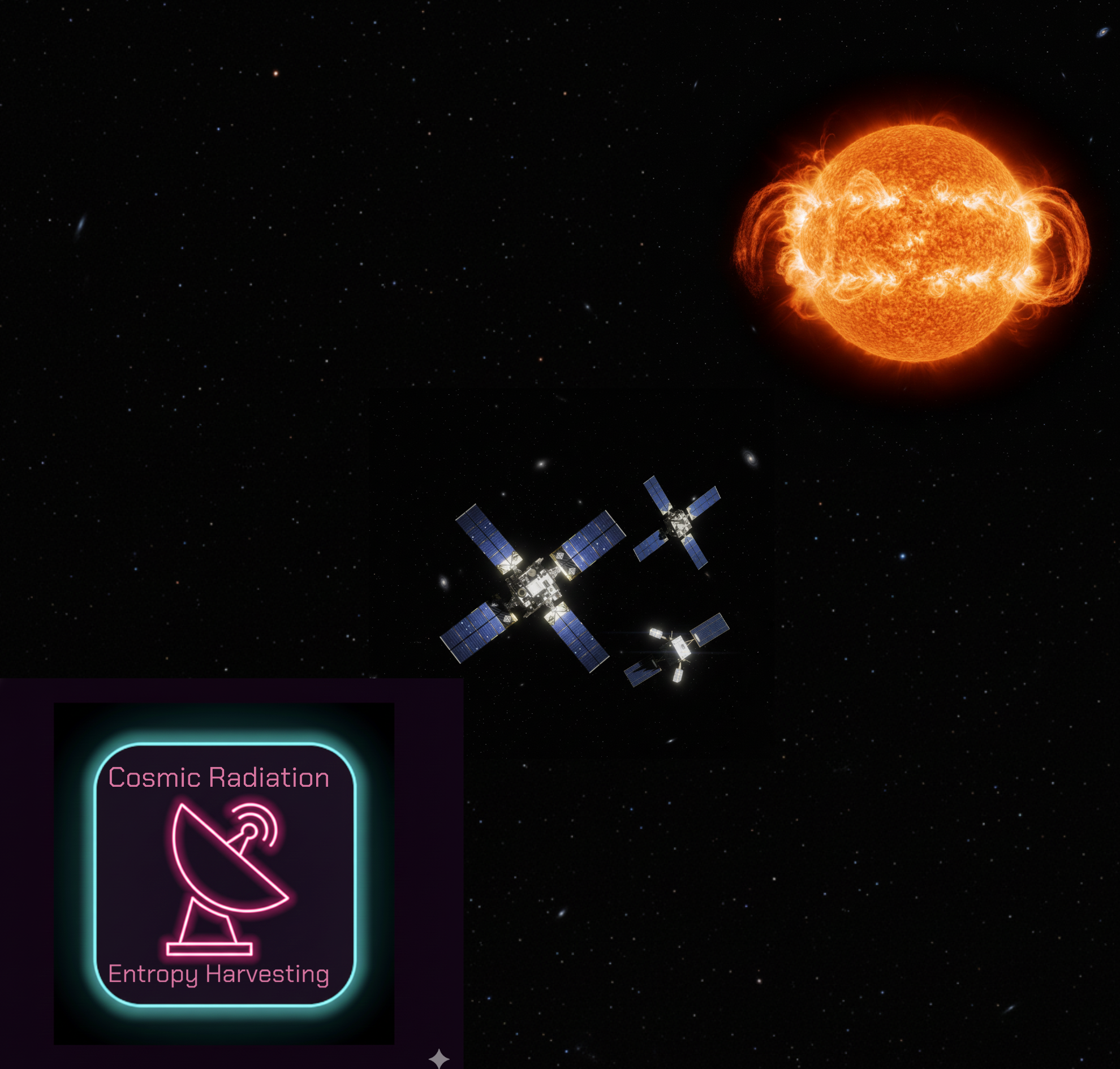
Space is constantly engulfed in what can be described as a sea of fluctuating radiation levels from many different sources.
This radiation is constantly observed and harvested for the derivation of randomness.
Cosmic randomness is made accessible by Beacons that are essentially ledgers of blocks, each containing random values in addition to metadata that serves for observability and attestation.
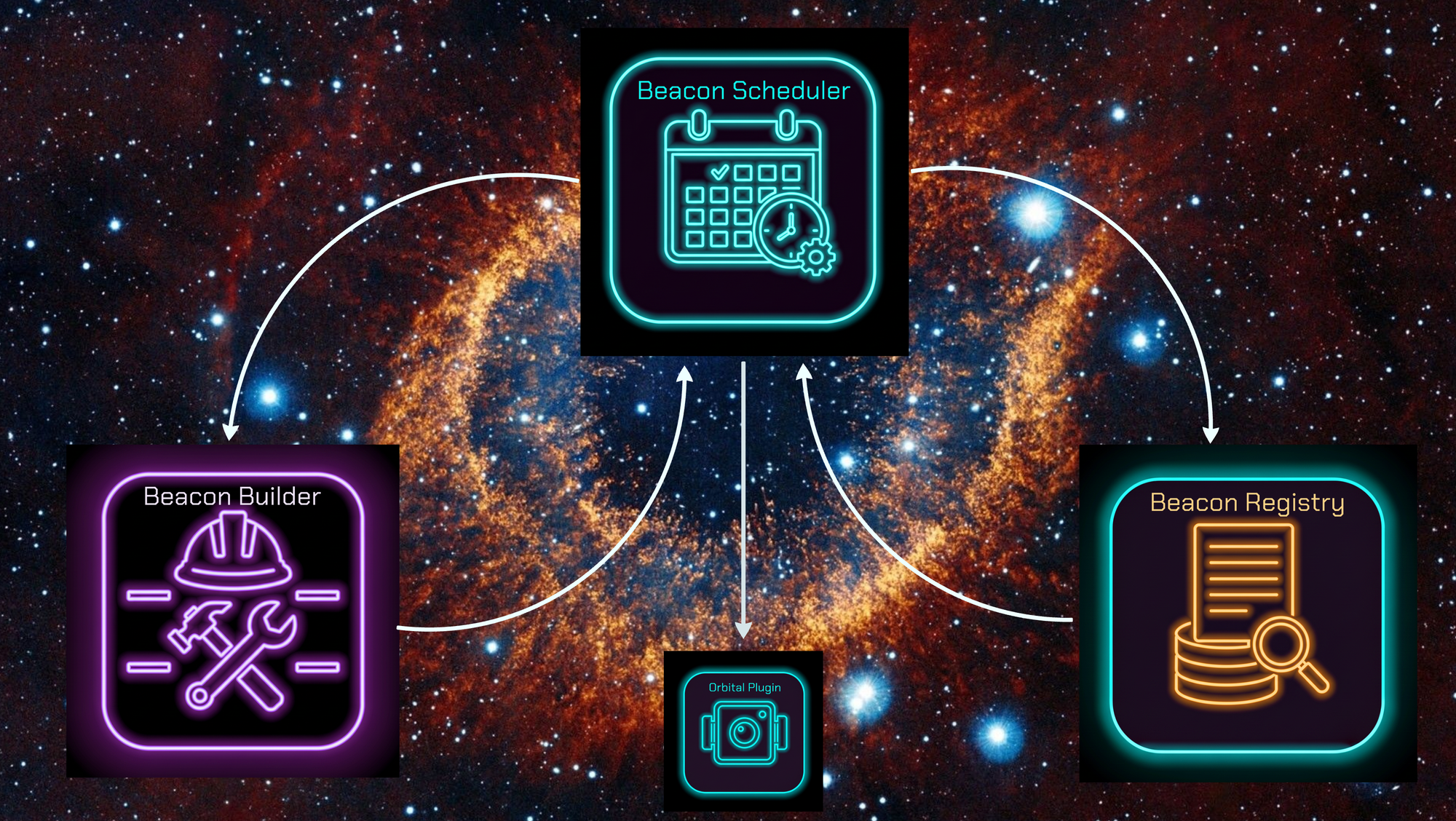
Beacon management is a concurrent elegant dance orchestrated by a Beacon Scheduler which retrieves and persists data belonging to an array of beacons from the Beacon Registry.
The scheduler taps into the Orbital Plugin for fresh randomness and then uses the Beacon Builder to create the next block in the sequence for any of the given beacons.
Some of the beacons are public while others are privately owned and consumed as a service.
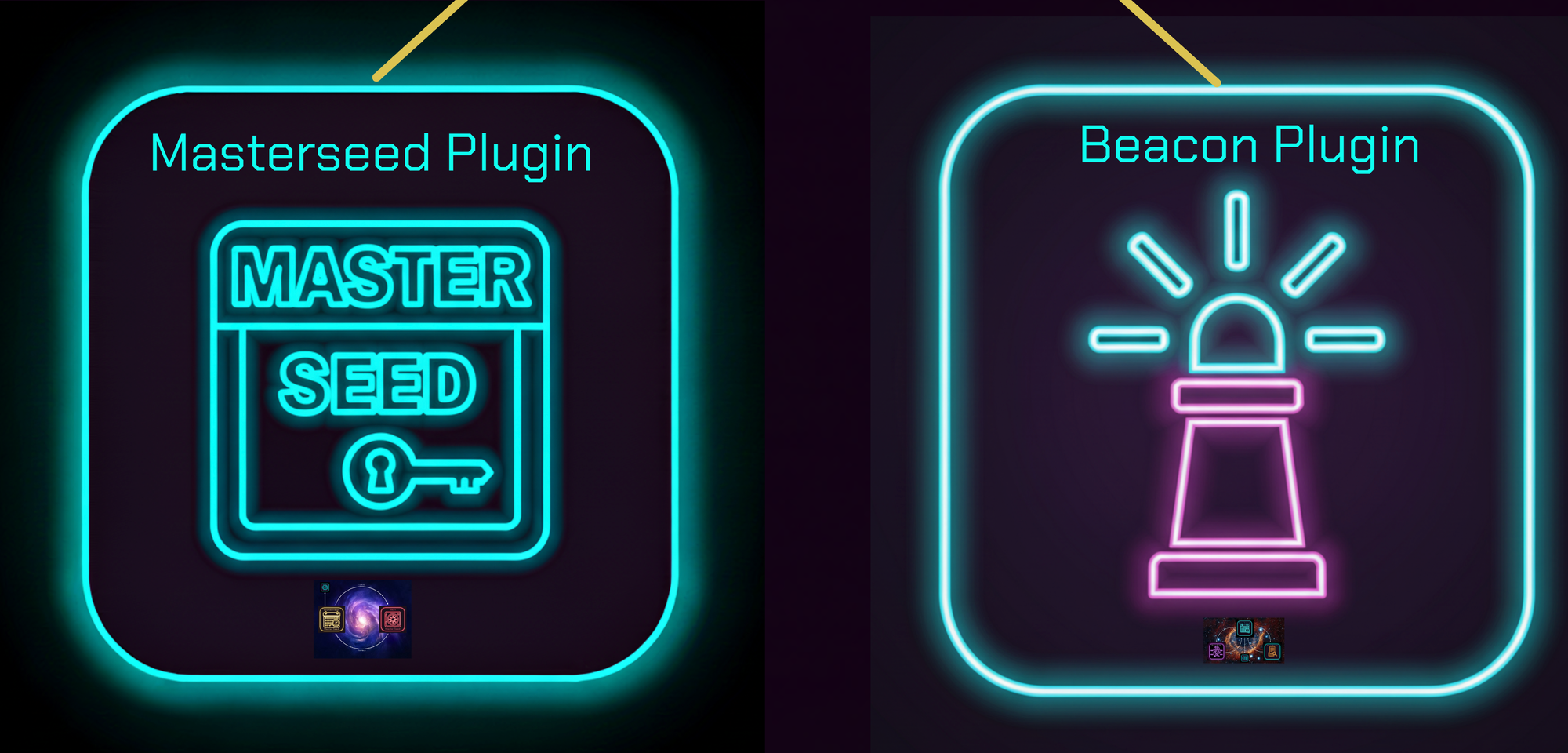
Resiliency and consistency are paramount and of the utmost importance at SpaceComputer and therefore the beacon plugin also employs a MasterSeed Plugin in order to mitigate incidents where orbital services become temporarily unavailable.
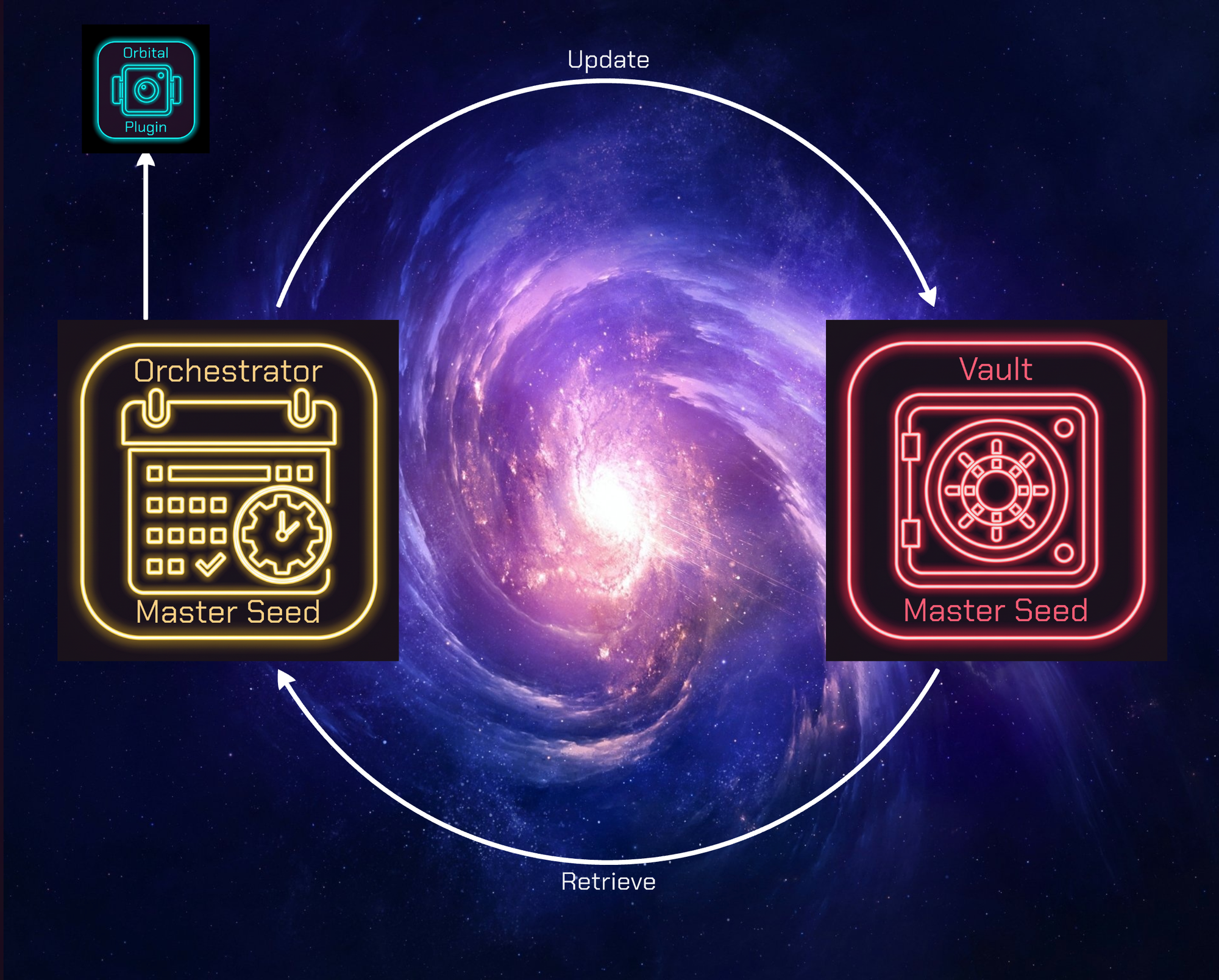
The MasterSeed Plugin consists of an orchestrator which regularly retrieves randomness from our orbital services and maintains a cache of these values persisted within the MasterSeed Vault.
These values serve as seeds for deriving further cosmic random values at high scale and with consistent availability.
While OrbitPort employs multiple methods and distribution channels for exposing cosmic randomness to consumers, one facet we'll touch upon is IPFS.
IPFS stands for Interplanetary File System and is essentially a world wide decentralized network of nodes. Together these nodes maintain a network of addresses that each references content of any type.

Addresses are constantly being created, pinned and discarded and are communicated between nodes using gossip protocol. The network provides eventual consistency.
Every beacon block that we create is published to the network and receives it's own new dedicated address.
In order to facilitate easy consumption of our random values without having to constantly retrieve updated block addresses, SpaceComputer employs IPNS - Interplanetary Name Space, which is a single consistent address that is always updated to reference each beacon's latest block.
Each beacon's IPNS address is never changing, always available and always updated, making retrieval of fresh randomness easy and straightforward.
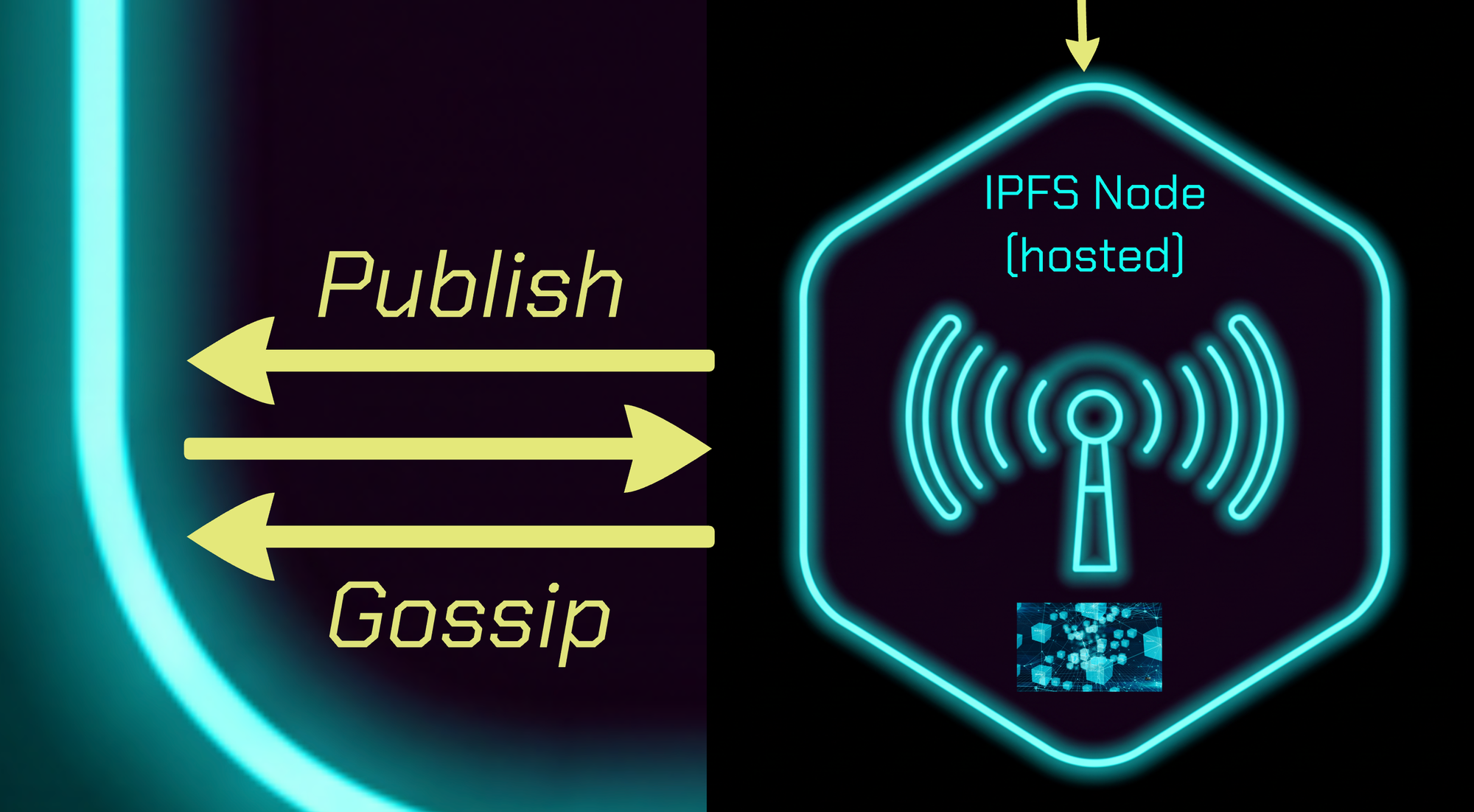
SpaceComputer's hosted IPFS nodes participate in the decentralized IPFS network and serve for publishing updated beacon block addresses and updating IPNS referenced blocks to other nodes around the world.

Consumers, Applications and On-chain services can all access the beacon's IPNS addresses and retrieve fresh randomness on demand.
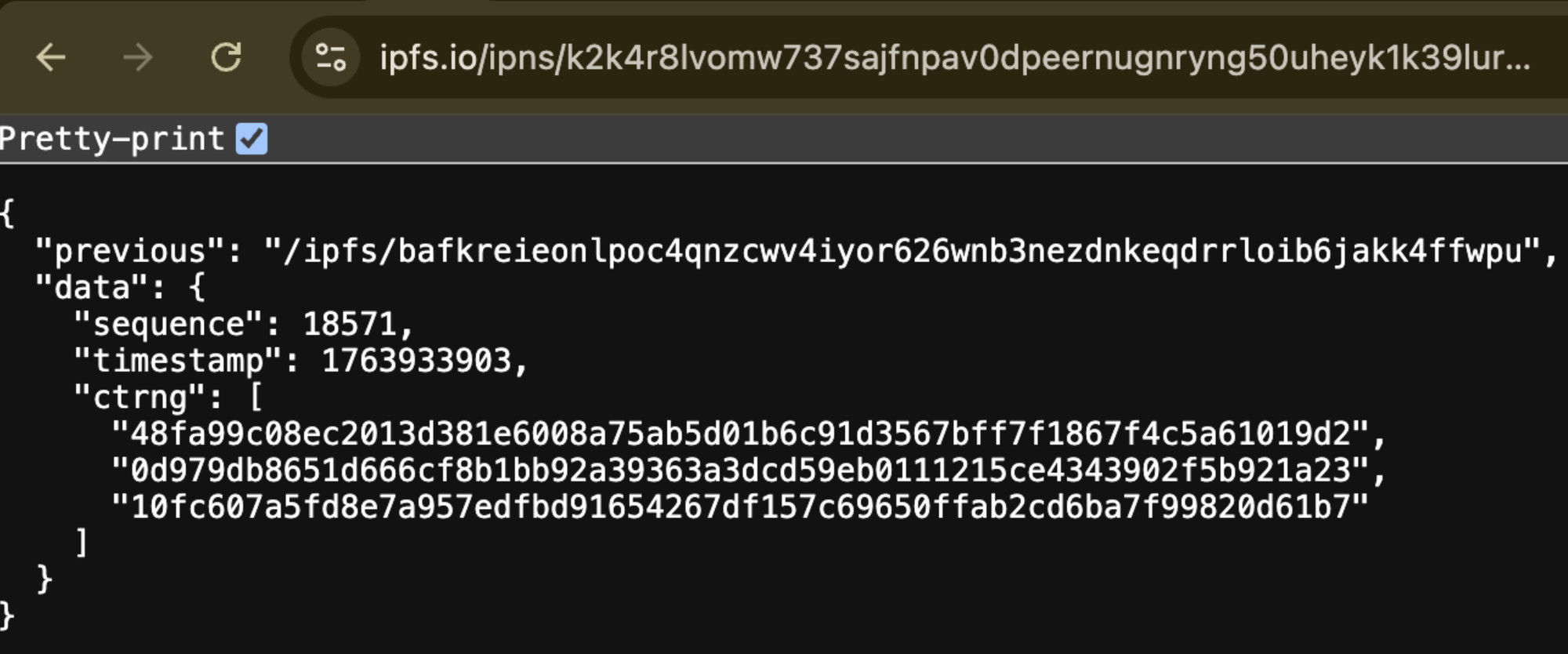
From a consumer's perspective A beacon is a blockchain where every block contains the ever growing sequence number, a reference to the previous block and the much coveted Cosmic Random Numbers.
Newer beacons also include various forms of attestation for validating randomness and authenticity of both the source of randomness as well as the Trusted Execution Environment utilized for the secure generation process.
Ready to start using the Randomness Beacon?
Read the Orbitport Docs
Gain your Access Key for Orbitport
Community Developer Support on Telegram